
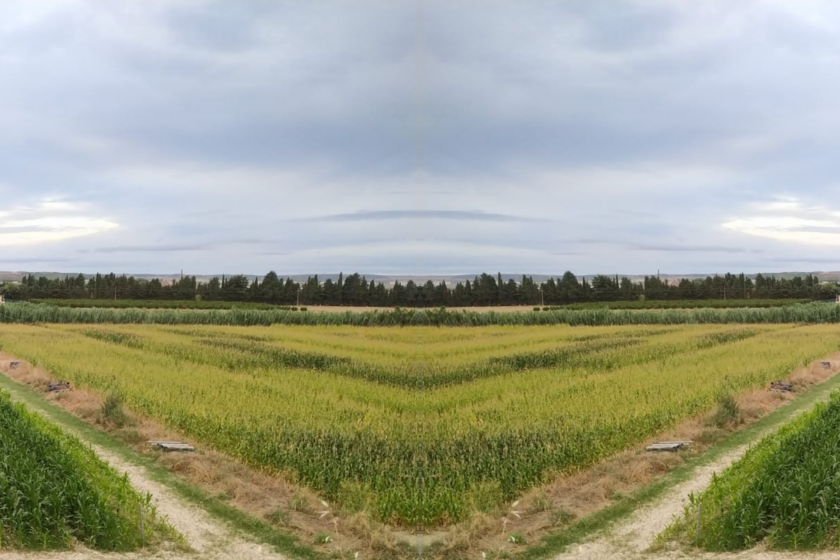
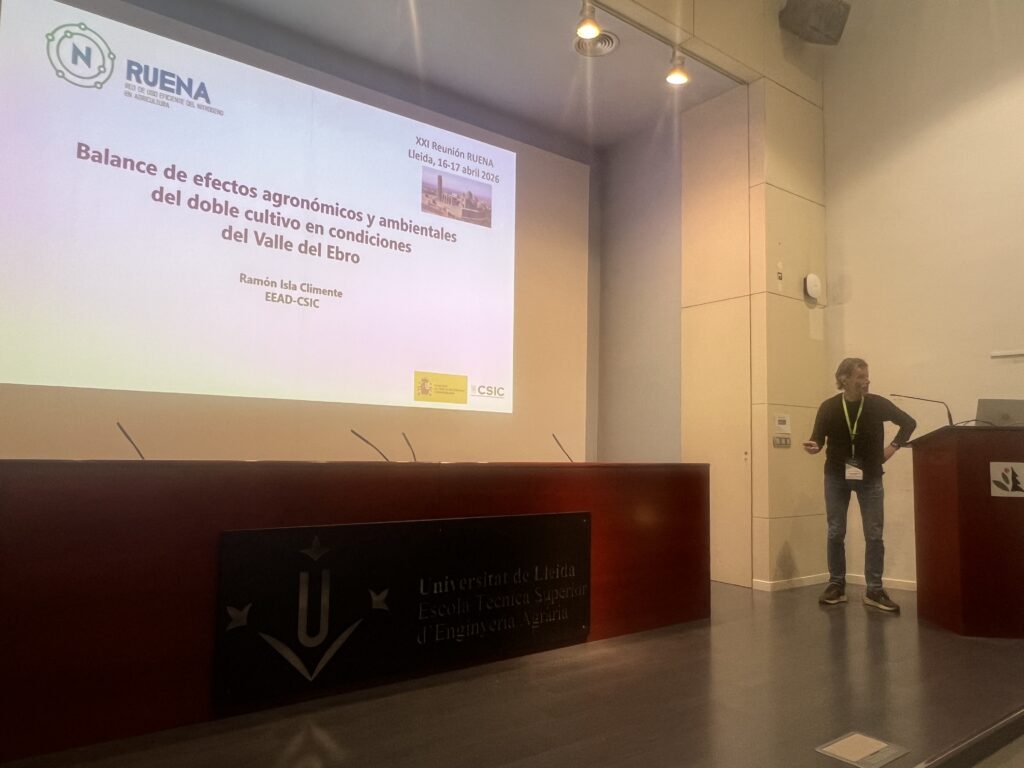
On April 16 and 17, 2026, the 21st Meeting of the RUENA Network (Network for the Efficient Use of Nitrogen in Agriculture) was held at the Higher Technical School of Agri-food, Forestry and Veterinary Engineering (ETSEAFiV). The meeting was attended by researcher Ramón Isla Climente from the RAMA Group (EEAD-CSIC).
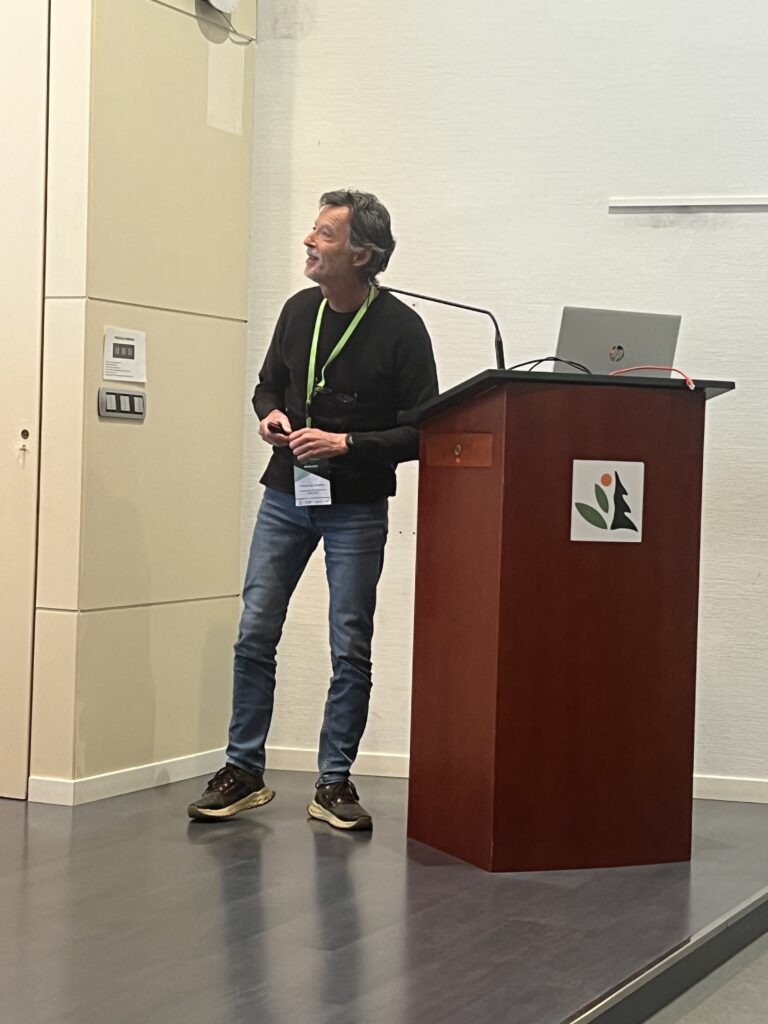
During his participation in the meeting, Ramón Isla delivered the invited lecture “Balancing Agronomic and Environmental Effects of Double Cropping in the Ebro Valley”, in which he presented the most relevant results of a recent study evaluating the productive advantages of double-cropping systems under irrigated conditions, as well as their environmental effects. The study presented formed part of the doctoral thesis of Inés Zugasti López, co-supervised by the speaker and fellow EEAD researcher José Cavero Campo.
The results highlighted the high productivity of the barley + maize double-cropping system compared with maize monoculture, showing the advantage of improving water-use efficiency by producing a greater amount of grain per cubic meter of evapotranspired water. This double-cropping system, when managed with rational irrigation and fertilizer practices, made it possible to reduce nitrate concentrations in drainage water compared with monoculture maize systems, although higher emissions of nitrous oxide — a potent greenhouse gas — were observed. On the other hand, the pea + maize double-cropping combination increased nitrogen-use efficiency due to the lower nitrogen fertilizer requirements of peas, achieving interesting production levels, although clearly lower than those of the barley + maize system.
The barley + maize double-cropping system is the most widespread in Aragón because of its higher productivity and because it provides the greatest economic return, as shown in a recent Master’s Thesis presented at the University of Zaragoza, also coordinated by members of the RAMA Group.